The Leadership Compass™: Five Pillars That Separate Leaders Who Last From Leaders Who Just… Lasted
Let me start with something that might sting a little. Most leadership development is cosmetic. A two-day offsite. A personality assessment with a colour-coded report you glance at twice. A keynote from someone whose main qualification is that they once ran a marathon and made it a metaphor for business. You leave feeling inspired, maybe a little reflective, and within three weeks you’re back to doing exactly what you were doing before – just with better-looking slides.
I’ve seen it happen hundreds of times. I’ve watched organisations spend serious money on leadership programs that produce almost nothing of lasting value, because they were focused entirely on skills and behaviours – the ‘what’ of leadership — while completely ignoring the ‘who’.
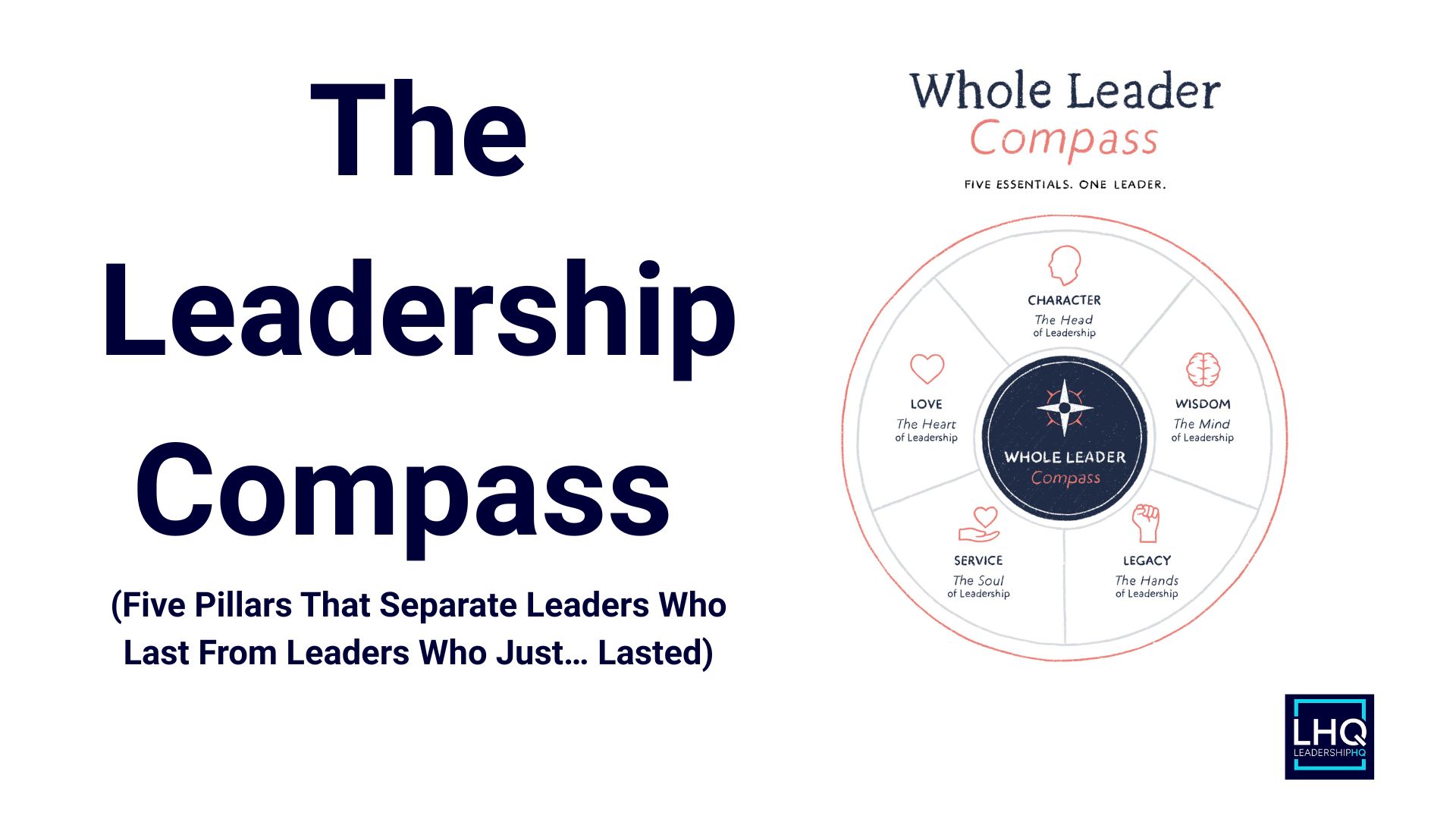
Our Leadership Compass™ is different. It doesn’t start with what you do. It starts with who you are. A compass doesn’t tell you where to go. It tells you where north is – so that no matter how unfamiliar the terrain, no matter how thick the fog, no matter how loud the noise around you, you always have a point of orientation. You always know how to find your way back.
The Leadership Compass™ works the same way. Each of its five pillars is a point of orientation — a quality to develop, live, and return to whenever leadership asks something genuinely difficult of you. And it will. Leadership always does.
Together, these five pillars don’t just make you more effective as a leader. They make you more whole as a human being.
And that, ultimately, is the whole point.
🧭 Pillar One: Character — The Foundation Everything Else Is Built On (And The Thing Most People Skip)
Here’s a hard truth: you can be technically brilliant, strategically sharp, commercially astute, and still be a genuinely terrible leader. I’ve met plenty of them.
At the core of leadership isn’t intelligence or charisma or the ability to command a room with a well-timed pause. It isn’t your MBA, your track record, or your LinkedIn recommendations. At the core of leadership is character — and if that foundation is shaky, everything built on top of it eventually cracks.
Character is authenticity. It’s integrity. It’s the courage to hold your values when things get genuinely difficult – not when it’s easy and cheap, and everyone’s watching, but when it’s costly, inconvenient, and no one would know the difference. That’s the test.
Think of it like a tree. The branches — your skills, your strategy, your executive presence — might be what people see. But it’s the root system that determines whether you survive a storm. Shallow roots, beautiful branches, wrong outcome. Deep roots? You can weather almost anything.
Character is also critically about consistency. Not the consistency of doing the same thing every day, but the consistency of being recognisably yourself – your values intact, your word reliable, your intentions honest – regardless of what’s at stake or who’s in the room. People are watching. They’re always watching. And they’re not watching your performance reviews or your KPIs. They’re watching what you do when things go sideways. That’s your real character score.
Everything else on the Compass rests on this foundation. Build it deliberately. Build it with care. And if you find gaps — and you will — have the courage to address them honestly rather than paper over them with spin.
❤️ Pillar Two: Love — Yes, I Said Love, and No, I Won’t Apologise for It
Right. Let’s address the eye-rolls immediately.
I know “love” isn’t a word that typically appears in leadership frameworks. It makes people uncomfortable. It gets replaced with softer corporate language: ’empathy’, ‘psychological safety’, and ‘human-centred leadership’. All fine. All valuable. But I use the word ‘love’ deliberately, because I think the sanitised versions quietly miss the point.
Love in leadership is not sentimentality. It is not softness. It is absolutely not the avoidance of hard conversations — in fact, I’d argue that genuine love in leadership requires hard conversations, because you care too much about someone’s growth to stay comfortable and silent.
Love in leadership is a commitment. A decision. A daily, sometimes inconvenient, sometimes costly orientation toward the people around you — their dignity, their potential, their well-being. It shows up as genuine empathy. As care that isn’t performative. As the deep and consistent desire to see the people around you flourish — not as instruments of your success, but as human beings in their own right.
Leaders who lead with love build environments where people feel truly valued, truly seen, and truly safe to bring their best. And here’s what that unlocks: discretionary effort. The thing that no contract, no incentive scheme, and no KPI framework can manufacture. When people feel genuinely cared for, they give more than you ask — not because they have to, but because they want to. That’s love’s business case, if you need one.
It also builds the kind of resilience that outlasts any strategy document. Teams that trust each other, that genuinely care about each other, don’t fall apart when things get hard. They lean in. They solve problems. They protect each other. You don’t get that from a values poster on the wall. You get it from leaders who made love a practice, not just a sentiment.
And ultimately? Love is the quality that makes people choose to follow you. Not because they’re paid to. Not because you’re the boss. But because you’ve made them feel, consistently and genuinely, that you are for them. That is extraordinarily rare. And extraordinarily powerful.
💡 Pillar Three: Wisdom — The Quality You Can’t Fake, Fast-Track, or Buy in a Course
Let me tell you about the most dangerous kind of leader I’ve encountered in my career.
Not the aggressive one. Not the insecure one. Not even the one who takes credit for everyone else’s work (though they are deeply tedious).
The most dangerous leader is the one who is absolutely, unshakeably convinced that they already have everything figured out.
They stopped asking questions somewhere along the way — usually after a significant success that they interpreted as confirmation of their worldview rather than a data point in an ongoing education. They stopped listening, really listening, because they already knew. They stopped being curious because curiosity implies uncertainty, and uncertainty feels, to them, like weakness.
These leaders do enormous damage. And almost none of them know it.
Real wisdom is the opposite of that. It is the ongoing, never-finished, sometimes-uncomfortable pursuit of understanding – of yourself, of the people around you, and of the systems and contexts you operate in. It comes from reflection: from actually sitting with your experience and asking what did I learn?’ rather than just moving on to the next thing. It comes from intellectual humility — the genuine, embodied belief that you do not have all the answers and that the person in front of you might know something you don’t.
It comes from curiosity that doesn’t have an agenda. From openness to being wrong. From the willingness to change your mind when the evidence warrants it, without treating that change as a threat to your identity.
Wisdom also lives in the questions you ask. The wisest leaders I’ve worked with are extraordinary questioners. They ask things that other people wouldn’t think to ask. They sit with complexity rather than rushing it toward resolution. They resist the seductive simplicity of a clean narrative when the messy truth is more accurate and more useful.
The best description I ever heard of wisdom came from a leader I deeply respect: I’ve been doing this for thirty years, and I still feel like a beginner. I hope I always do.
That’s the spirit. That’s what you’re aiming for.
🌱 Pillar Four: Legacy — The Question That Will Rearrange Your Priorities If You Let It
Here’s an exercise. Imagine you’re leaving your role tomorrow. Not retiring — just leaving. Moving on.
Now ask yourself, honestly: what would people say? Not at the leaving party, where everyone is generous, and the speeches are kind. After. In the car park. Over coffee the following week. When the warm glow has faded, and people are just talking about what actually happened.
What did you leave?
This question has the power to rearrange everything if you take it seriously. Because it forces you to look past the short-term metrics — the quarterly results, the targets hit, the fires extinguished — and think about what you’re actually building. The culture you’re shaping, or failing to shape. The people you’re developing or holding back. The standards you’re upholding or quietly letting slide because it’s easier.
Here’s what legacy is not: a single grand gesture. A big win. A transformation programme with your name attached to it. Legacy is not built in the highlight reel. It’s built on the accumulation of daily choices — the small decisions, the quiet moments of character, and the consistent orientation toward leaving people and places better than you found them.
It’s the junior team member you took time to mentor when you were busy. It’s the cultural norm you called out because it wasn’t right, even when calling it out was uncomfortable. It’s the way you ran your meetings, handled disagreement, responded to failure, and celebrated success. All of it is legacy material. All of it adds up.
Legacy thinking is sometimes dismissed as vanity — who cares how you’re remembered? — but I’d push back on that hard. Legacy thinking is actually one of the most clarifying and useful lenses available to a leader, because it continually re-anchors your decision-making in what actually matters and what actually lasts. It’s the antidote to short-termism. The corrective to ego. The reminder that leadership is, at its heart, an act of stewardship — you are responsible for something that existed before you arrived and will continue after you leave.
What shape will it be in when you go?
🤝 Pillar Five: Service — The One That Separates the Leaders Who Get It From the Ones Who Never Will
I want to end here, because in many ways, service is the pillar that holds everything else together.
Service is a decision. Made consciously. Made repeatedly. Often made quietly, with no audience and no applause. It is the choice — against the pull of ego, self-interest, and the very human desire to be seen and recognised — to orient yourself toward the needs of others and the greater good.
It sounds simple. It is genuinely hard.
Because leadership, left unchecked, tends to feed the ego rather than restrain it. The more authority you accumulate, the more you can mistake that authority for the point. The trappings become comfortable. The deference becomes expected. The story shifts — often imperceptibly — from I’m here to serve to I’m here to be served. It happens to good people. It happens quietly. And it is the beginning of the end of any leader’s real effectiveness.
Service is the antidote. It is the quality that shifts leadership from authority to responsibility. From ambition to contribution. From ‘look at me‘ to ‘what do you need?’ It’s the question that changes everything – not ‘How do I look? But how can I help?
Leaders who serve well build something that leaders who perform never quite manage: genuine trust, genuine loyalty, and genuine impact. Not the kind that requires constant management or careful PR. The kind that sustains itself because it was built on something real.
And here’s what I’ve observed over and over again, in every kind of organisation and every kind of leadership context: the greatest leaders — the ones who leave lasting legacies, who build extraordinary teams, who are genuinely missed when they go — are the ones who return to service again and again. Not just when it’s easy. Not just when it’s noticed. But as a fundamental orientation. A way of being.
It’s why they started. It’s what kept them going. And it’s what made them matter.
So. Where Does Your Compass Point?
Five pillars. One framework. Infinite applications.
The Leadership Compass™ isn’t a checklist. You don’t complete it. You practise it — imperfectly, repeatedly, with varying degrees of success depending on the season and the pressure. Some days you’ll nail all five. Other days, you’ll fall short of one and have to find your way back.
That’s fine. That’s leadership. That’s being human.
The point isn’t perfection. The point is orientation.
So here’s my question for you this week: which of these five pillars is asking the most of you right now? Which one is calling you to grow?
Drop it in the comments. I’d genuinely love to know.
The Leadership Compass™ is the foundation of my keynote and leadership programs. Most leadership development changes what people do. Mine changes who they are. If that distinction matters to you, let’s talk.